
Turning old into new
More than 500,000 tonnes of flat glass are discarded in Switzerland every year – even though glass is an ideal material for recycling. A pilot project is now aiming to prove that flat glass can be recycled.
Whereas in the past you could admire the frost patterns that formed on windows, modern windows ensure that neither heat nor cold can penetrate into buildings. Due to the tightening of legal requirements with respect to thermal insulation, it is expected that all windows installed before the year 2000 will be replaced by 2050. From an energy perspective, this makes sense. However, when it comes to waste flows, the picture is not so simple: producing multi-glazed windows is very resource-intensive and there is currently no recycling process for window glass. “Unfortunately, it is cheaper to dispose of flat glass in landfills than to pay the cost of separating old windows from their frames and recycling them. At present, 82 percent of flat glass ends up in landfills, while 18 percent is melted down together with bottle glass – which is actually downcycling. Although windows contain a lot of grey energy, recycling is not yet mandatory,” explains Michelle Schneider from the Institute of Constructive Design.
«To recycle the window glass, it must first be separated from the window frames. The costs for the process exceed those of landfill disposal – a system that creates false incentives.»
Pilot project in Winterthur
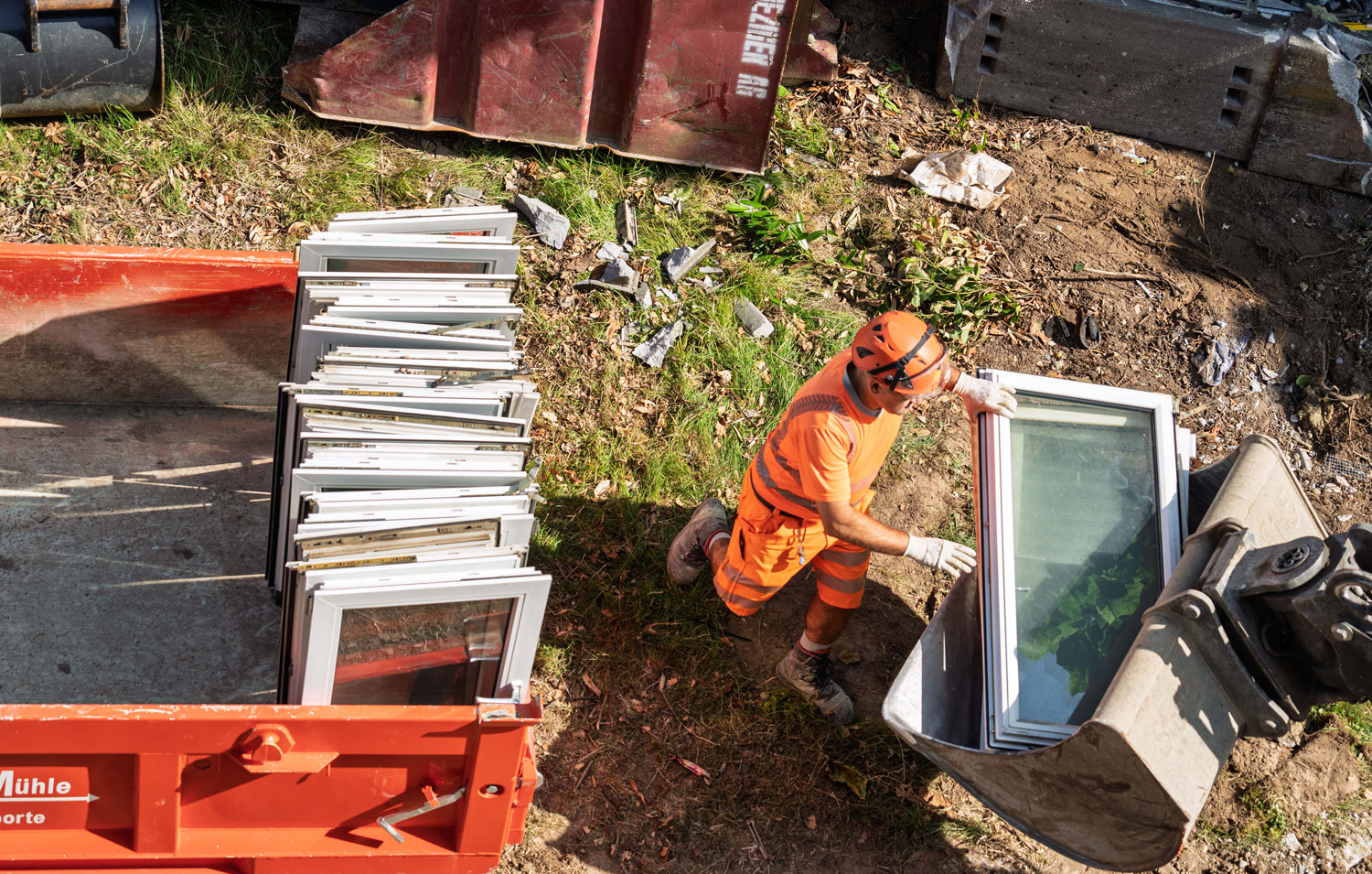
Schneider has been researching how to reuse or at least recycle windows for three years, initially as part of her thesis for her MA in Architecture and now as a research associate. When she learned about a replacement building project in close proximity to the School of Architecture, Design and Civil Engineering, she sensed an opportunity and launched a pilot project together with several industrial partners. All 375 window sashes from the demolished building were removed and carefully separated from their PVC frames. The recycling firm Sibelco tested whether the glass was suitable for producing new window glass. “The challenge was to ensure that 50-year-old windows meet the high purity requirements, as windows often have residues on them like plaster, adhesives or other mineral substances. There is also the risk of the windows being contaminated with other substances, such as tar, on demolition sites or during transportation,” explains Schneider.
The first milestone of the project: the windows have met the purity requirements. They were melted down and are now being processed to make new windows that could eventually adorn the replacement building. The project will not be completed entirely without any additional resources, as the new building will have more windows than its predecessor and will use triple glazing instead of double glazing.
Mandatory recycling within reach
“The costs of our process are still higher than those for landfill disposal, yet we are only at the beginning. If companies specialise in the recycling of windows, it will be possible to optimise the processes and achieve considerable cost reductions. However, the most important thing for the time being is to show that flat glass recycling is feasible with a little extra effort. This could open the door to mandatory recycling,” says Schneider. The potential impact is huge: “If all of the windows that are removed in Switzerland every year were melted down and reused, some 350 million kilograms of CO2 could be saved compared to producing windows from primary raw materials. That is roughly the same amount of emissions as if the entire population of Basel were to fly to New York.”
0 Comments
Be the First to Comment!