
AI and the great rethink
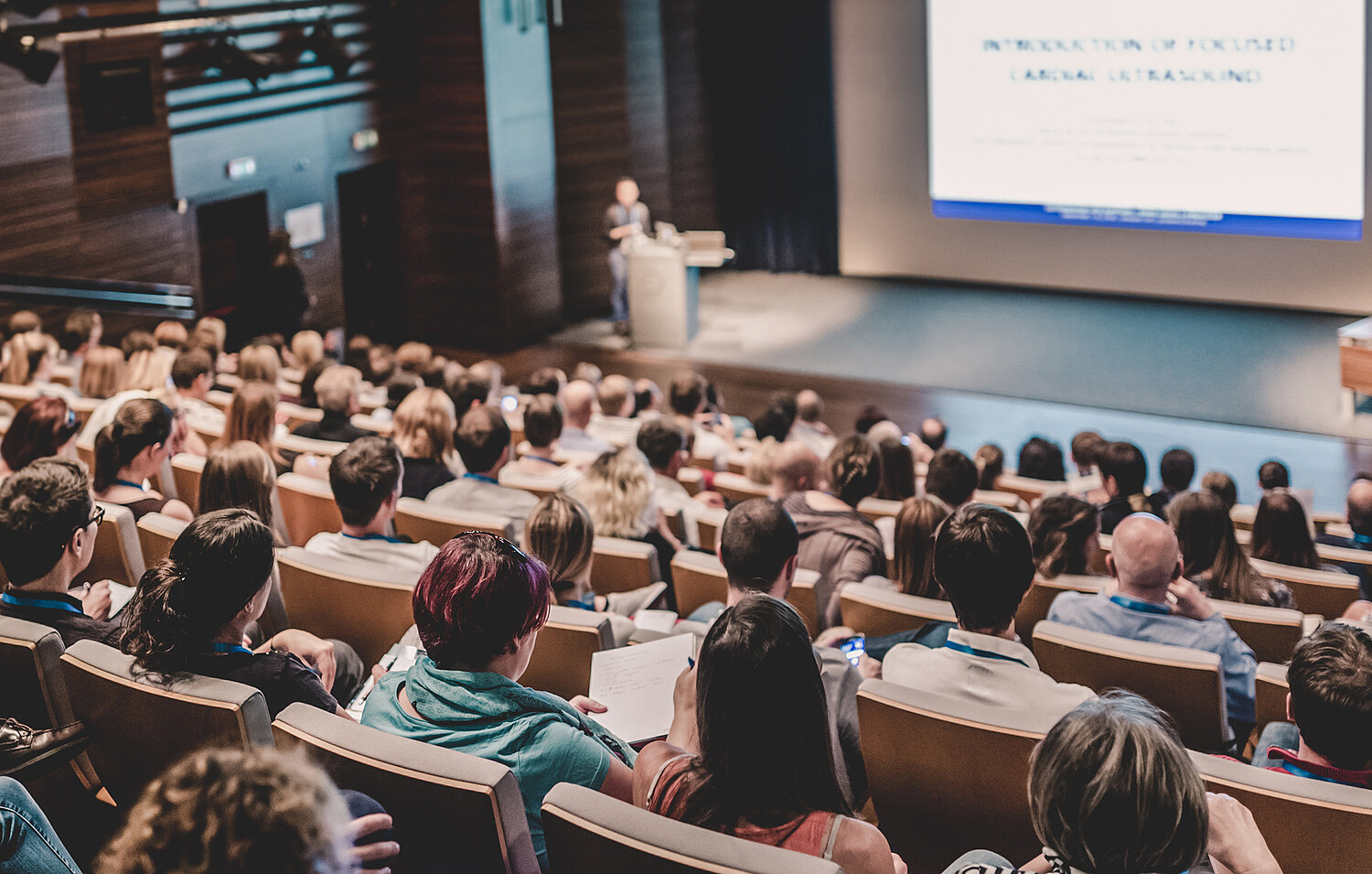
What does studying actually mean when AI can now deliver answers to every conceivable question? One thing is clear: learning objectives and examination formats will have to change.
The new technology is putting institutions to the test. What do students actually still need to learn when everything can be answered by a machine in a matter of seconds? How can lecturers verify which knowledge students have truly acquired? And do we actually still need this kind of control and evaluation? These are pressing questions, yet they are not easy to answer.
Just a few months after ChatGPT had been made available online, the ZHAW’s Academic Affairs Office published guidelines governing the use of AI tools for assessments. The Academic Affairs Office sees the use of artificial intelligence as an integral part of the digital transformation and is therefore aiming to ensure the responsible use of AI across the institution. When it comes to examinations, there are varying approaches: banning the use of AI to test core competencies or deliberately allowing its use, although the latter approach necessitates rethinking the tasks assigned. In the case of written term papers or theses, the use of AI must always be declared. However, this traditional form of assessment has lost much of its meaning, as there is no reliable way to monitor the use of AI. Lisa Messenzehl-Kölbl, Head of the Teaching Technology and Didactics section in the Academic Affairs Office, explains: “AI is leaving lecturers with no choice but to focus more on learning as a process. The new technology brings us back to the fundamental question of what assessments really mean. However, this discussion needs to take place in society as a whole and in fact starts with grading at primary school level. Nevertheless, students must master basic competencies that allow them to also recognise connections without AI. Examinations are the established instrument for assessing this ability in our current education system.”

“AI is leaving lecturers with no choice but to focus more on learning as a process. The new technology brings us back to the fundamental question of what assessments really mean.”
To monitor the use of AI during digital examinations, the ZHAW uses the digital examination invigilator SMOWL, a software programme that takes screenshots of the students’ screen during an examination and documents certain computer activities. Should there be any doubts as to whether a student has completed an examination themselves without the help of AI, these recordings reveal which websites or applications were used during the examination. Fabian Jasper-Möller, an expert for digital examinations, explains: “This set-up creates fairness and objectivity in the assessment process. SMOWL is also a great opportunity for competence-based examinations, as it allows for realistic programming or open-book examinations, for example, in which the use of specific tools such as programming environments is intended as part of the examination.”

“Learning still needs to be a little challenging. If we want to develop our muscles, we don’t send our friends to the gym – we have to do the work ourselves.”
In the longer term, however, every discipline faces the question of how to redesign assessments so that students’ knowledge can be tested without having to ban AI. Lecturers from various Schools and a student share their views.
Matthias Meyer – the optimist for the future

“My students are expected to learn how to present a topic that they choose and develop themselves from the intersection of health economics, health promotion and prevention to their fellow students in five minutes. The assessment in my module takes the following form: the students create a report on a chosen topic following set guidelines and use this to produce various didactic products, such as a poster, a presentation, a podcast or a learning video, with the help of AI. The students subsequently have to assess these products.
Students need clear guidelines for dealing with AI. For me, however, the biggest question is what do we still need to learn today? In health promotion and prevention, it is absolutely essential to know certain facts, such as which substances have what effects. However, the manner in which we acquire this knowledge will change.
New teaching and learning forms
In the future, students will perhaps gain knowledge using chatbots, while lecturers will take on more of a coaching role, explaining the context and being available for questions or discussions. Just as students once practised the ten-finger typing system, they now have to practice how to formulate the right prompts that allow them to utilise AI as efficiently as possible. We also have to make them aware not only of which AI systems exist but also of the fact that AI may be trained on incorrect or ideologically biased content and might sometimes be prone to hallucinations. AI will not disappear, so let’s learn how to deal with it.”
Rainer Gabriel – the visionary
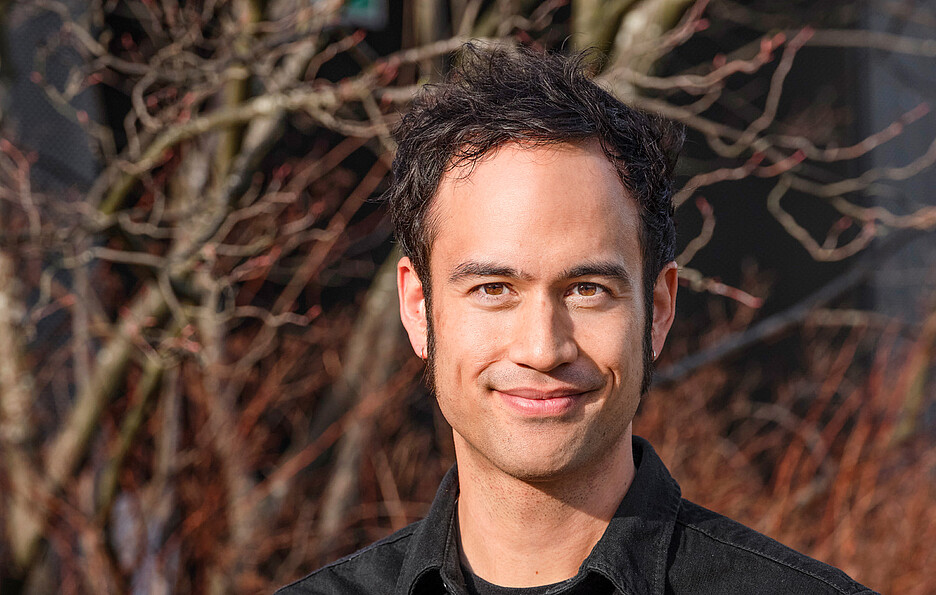
“For five years now, our students have been sitting their examinations in open-book mode and according to the ‘open internet’ principle. This means that they are allowed to use any resources they want, including LLMs like ChatGPT. Over the past two years, we have noticed that the general level of grades has improved enormously and that many students are passing the examination with perfect marks. It is impressive how good the results from AI sometimes are.
Checking knowledge in this way becomes a bit of a farce. Perhaps we need a general paradigm shift that sees us move away from focussing on outcomes and their assessment in the form of grades towards a system that places emphasis on the underlying process. Many students still want to complete a worksheet correctly, as this is what they have become accustomed to at school. How they get there often doesn't matter to them. Perhaps the task in the future should be to work on a topic in a group, discuss it and create different approaches without directly thinking of coming to the ‘right’ answer in the box. Accordingly, maybe we don’t need grades anymore but rather an assessment of whether the students have participated in the discussions and taken the learning process seriously.
Individual learning support
The role of lecturers will change greatly. In the longer term, we are likely to no longer assume the role of experts who impart knowledge. Instead, we will be mentors who provide individual support, point out the limitations and biases of the LLMs, make connections and accompany students on their journey. Generally speaking, all universities need AI literacy – we need to know what role it should play and how to integrate it into our teaching. Because there is no going back.”
Shaline Freuler – the pragmatist

“I attended a language-focussed baccalaureate school and learnt Italian fluently in the traditional way. I am proud of this, and I love being able to use the languages I speak in personal conversations. Language is the key to societies and cultures; AI cannot compete because the emotional component is missing.
That said, when it comes to writing, I now feel more comfortable with AI. The fact that we all use AI to check spelling is nothing new. However, sometimes it also gives me suggestions on how to make my texts even better. That is not to say that I adopt every suggestion one-to-one, but as a companion in the writing process, it is helpful. AI is also my sparring partner and a source of inspiration, for example when it comes to finding interesting topics or perspectives for journalistic articles and compiling lists of questions for interviews.
Practice adds value
It is quite possible that teaching will change in the future through AI. What I value most at the ZHAW are the practical modules. This is where I learn the most. For theoretical lectures like economics, I could well imagine learning the content at home and then coming to the university to discuss specific case studies with the lecturers or solve tasks.
I am not afraid of AI. In journalism today, writing as such is no longer central. You need different skills as well as a basic knowledge of reliable sources to be able to make sense of the AI results. For the ZHAW as a university, I think that it is important to move with the times and use AI in a targeted manner where it makes sense.
Jeannette Philipp – the human touch

“Students still need to master language to be in a position to judge whether the AI output is correct and appropriate for the communication situation at hand. In my module, students have to deliver a persuasive speech. Over time, we have learned that the majority of students prepare their speech with the help of AI and then learn it off by heart.
Being able to react and convince
On the day of the examination, students are now given two topics to choose from and then have an hour to prepare their speech without using AI. We want to see if they can truly present an argument, develop a structure and formulate their ideas on their own. These are precisely the skills they will need later on in the professional world during face-to-face discussions. The demands of a typical negotiation situation or an important client meeting are a good example: if you are suddenly confronted with an unexpected objection, you have to be able to respond immediately, adapt your own position and convince your counterpart of your viewpoint spontaneously. This speed of thought and reasoning is what we train and is something that no AI can replicate. The students realise this themselves. They often tell me ‘that’s somehow just not me’ or ‘I would never say it like that.’ The students are very well aware that anyone who just parrots what the machine spits out will be exposed when confronted with the first probing question in a conversation.
What do I want for the future? I would like to see AI tools incorporated even better in our study programmes. If students were able to buy affordable pro AI licenses through the ZHAW, we could integrate them even more consistently into our teaching activities. Students need to be able to do both:, i.e. work with AI and still retain those human skills that cannot be outsourced.”
Morgan Kavanagh and Davide Garassino – the innovators
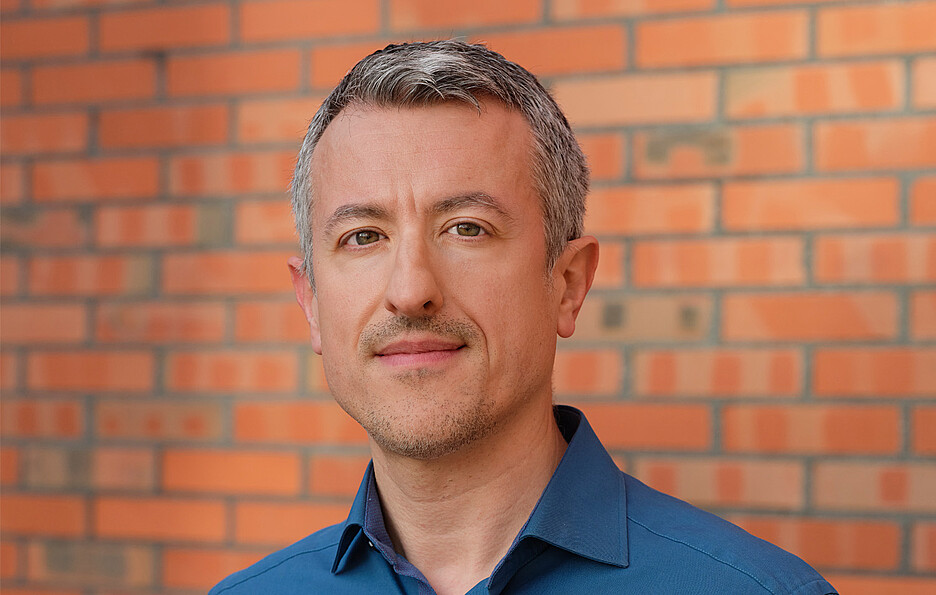
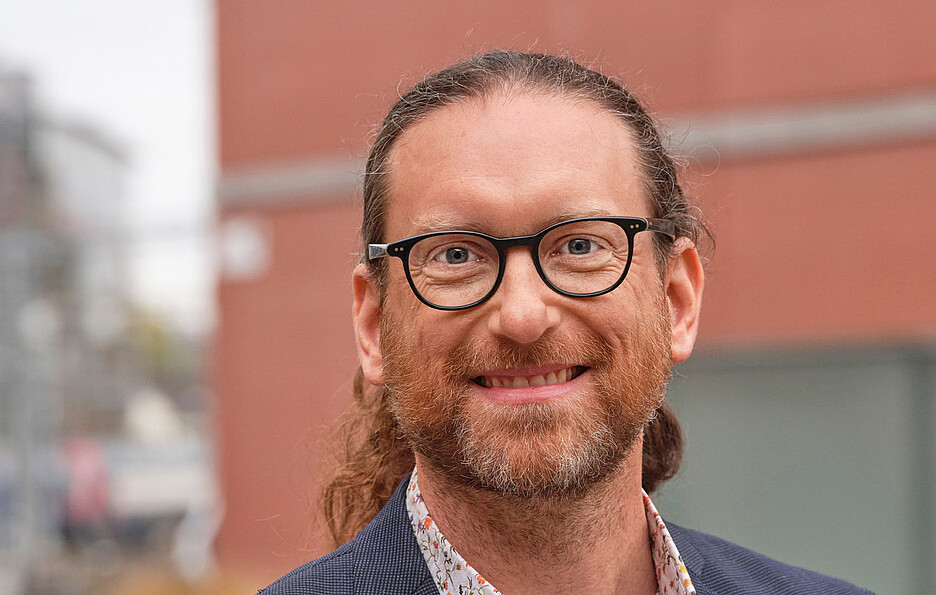
“Back in 2016, the field of translation was already confronted with innovative tools that have gone on to greatly change the profiles of the traditional interpreting and translation professions. This head start is now an advantage in terms of how the degree programme has developed. We have long since ceased to regard translations, i.e. the rendering of one language into another, as a traditional role. Machines are faster in this respect. Thanks to these tools, the profession has taken on more of a strategic function, one that involves organising translations and ensuring that they provide the cultural details and context required by different audiences. Our students already enter our degree programme with a high level of basic competence in various languages. During the first semester in particular, we strengthen their grammar skills and awareness of text analysis without drawing on AI at all. This is because language acquisition is more than just a writing process. It is about understanding cultures, statements made between the lines, and nuances. This is precisely where it is important that we as lecturers act as guides.
Involving students
It has been known for 20 years that the lecture format is inefficient for transferring knowledge. AI is now bringing it home to us that we have relied on the mere transmission of facts far too long. Even before the emergence of AI, it was clear that 20 percent of students cheat and learn nothing in the process. In our teaching, we use the ‘flipped classroom’ concept. We have, for quite some time, moved away from frontal teaching and rote learning towards involving students. They should define what is important in a topic and how to acquire that knowledge. This social setting, this group work, is very important to us, as students will need these skills further down the line in the workplace. What’s more, language technologies play an important role in our degree programmes, the keyword being ‘language engineering.’ Students should acquire programming knowledge so that they can use their linguistic expertise to successfully guide AI in the future and adjust its output.
It is perfectly fine to accept that some things are faster and easier with AI. One valuable insight from our students is that they are still motivated to master languages, as they cannot just fall back on AI in social contexts, such as personal conversations. For us, this also confirms the continued relevance of oral examinations.”
No way around AI anymore
And what vision does the Academic Affairs Office have for university operations? “I hope that in ten years we have learned how to handle AI, that we will no longer have to do time-consuming routine tasks, and that examinations will no longer be so important. Instead, students will learn with chatbots and be closely supervised by lecturers throughout the process,” says Lisa Messenzehl-Kölbl. Fabian Jasper-Möller adds that learning still needs to be a little challenging if it is to be effective. “If we want to develop our muscles, we don’t send our friends to the gym – we have to do the work ourselves.”
And what is ChatGPT’s answer to the vision question? “Teaching will become more hybrid and flexible – while there will be more online elements, there will also be a greater focus on interaction, seminar work and group work, including in-person.” In this small experiment by the author, the algorithm skilfully reflects the views of the people interviewed in this article. We will have found out whether this prediction has come true in ten years at the latest.
0 Comments
Be the First to Comment!